Our olive fields in France

160 hectares in Provence

60 hectares on the French Riviera
Next harvest in Provence
ATTENTION TO DETAIL AT EACH STEP THE ATTENTION TO DETAIL AT EACH STEP
Created in Nice in 1868, the brand Nicolas Alziari goes far beyond a simple production of olive oil; it represents a heritage of more than a century. As one of the few producers to manage farms, a traditional mill and sales outlets in France, we have total control over the steps necessary for creating our first-class olive oils. Our main estate, located near Nice, is dotted with hundreds of olive trees, including the variety "cailletier", symbol of our region. We operate several estates on the French Riviera following the principles of organic farming, totaling more than 60 hectares, which positions us as the main producer in the region and a reference in terms of superior quality olive oil*. You can explore all our wines on our website. To offer enthusiasts oils of unparalleled finesse and distinctive signature, we collaborate seamlessly with other fields in Europe. These specific wines are also available on our online store. Tasting a Nicolas Alziari olive oil is offering yourself a memorable Mediterranean experience, enriched by traditional know-how.

Nature respect
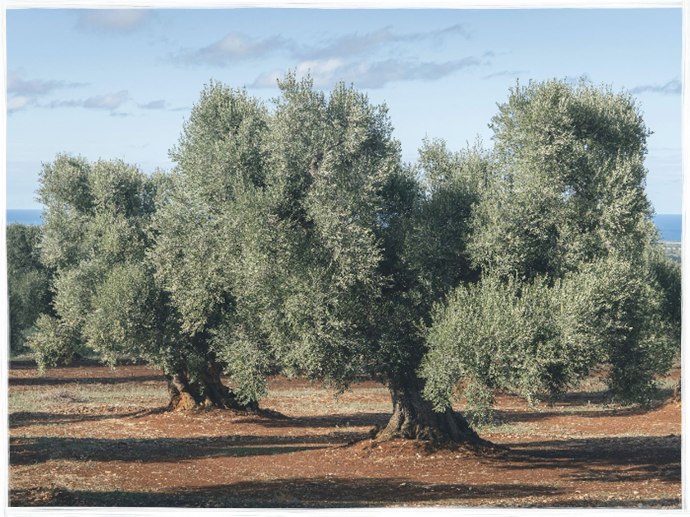
The cultivation of olive trees takes place throughout the year, entirely manual, on terraces (sloping land). For several years, we have favored organic farming methods because it is essential to think about the future while cultivating these hundred-year-old trees. Our olive trees receive attentive and regular care. Two key moments mark the life cycle of the olive tree. First, the pruning, which shapes the tree for next year’s harvest. This operation is done after the harvest, between February and April. It is a meticulous work that requires both precision and solid experience. Olive trees intended for production are not pruned in the same way as ornamental ones. We ensure that the trees do not exceed a certain height, and we trim the interior branches to maximize light. We apply the "goblet" pruning technique to aerate the tree, which helps prevent disease in humid environments. In our operation, we estimate that an efficient pruning done by one person takes about one hour per tree, which is a considerable amount of work.
THEN COMES THE TIME OF HARVEST
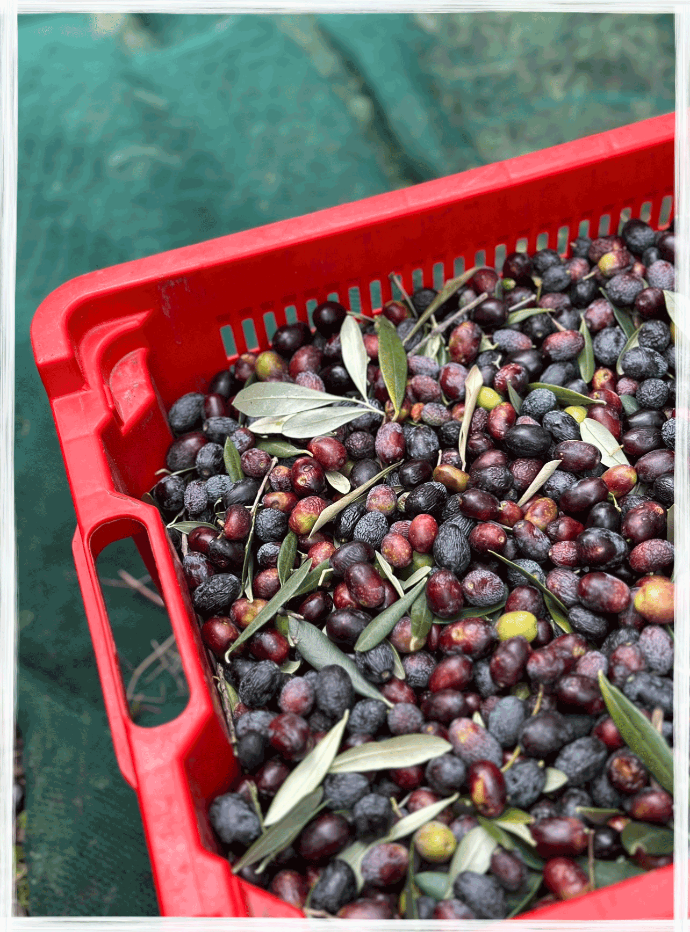
The olive harvest takes place between November and March, depending on the maturity of the fruits. For the Niçoise olive, picking is done in a "rotating" way, that is to say when the olives are at an intermediate stage between unripe and ripe. Cultivation on steep slopes presents particular challenges. The machines struggle to maneuver in these conditions, which means that the majority of tasks are carried out manually. The "gauzing" step involves using a rake to "comb" the olive branches and drop the olives. Traditionally, nets are placed under the trees before harvest to avoid losing fruit, but our house prioritizes quality and does not follow this method. We pick only the fresh olives, one by one, on the day of harvest. Although our yields are lower than our competitors, we guarantee exceptional quality. Then, during the sorting step, we separate the perfect olives, oval and soaked with oil, from those that are not. Olives without visual defects are intended for consumption as table olives, while the others are used to produce olive oil. Owning our own mill allows us to improve the quality of our oils, because we press the olives on the day of harvest.
*in terms of consolidated turnover, number of olive trees cultivated, olive oil flower offered, shops and mill owned, as well as in notoriety

To install this Web App in your iPhone/iPad press
 and then Add to Home Screen.
