The olive oil secrets
Known since ancient times, its origins are lost in the depths of history. All we know is that the Greeks and Romans used it daily in food and cosmetics. Olive oil is one of nature's greatest gifts. Our ancestors loved its flavor, and for a long time, it was the most noble source of vegetable fat in the Mediterranean basin. Olive oil has been used for centuries. The Romans, Greeks, and Hebrews used it for cooking, cosmetics, and even to light candlesticks.
From the Latin “oleum” (olive oil) derived from “olea” (olive), the term ‘olive’ appeared in France in 1080. The term “oil” appeared in the 12th century. The oldest traces of the olive tree's ancestors date back 20 million years, but it seems that cultivation began around 6,000 years ago. Of course, it grew all around the Mediterranean basin. Crete was the first to trade in olive oil and develop a significant culture. However, it was the Greeks who took up this type of cultivation and introduced it to Italy, North Africa, and France. The Roman Empire took control of its development and enriched itself with its culture. Expansion peaked in the 13th century, when olive oil began to be used in religious rituals, for lighting, soap making, and of course cooking..
Knowing how to read a label
“First Cold Pressing” and “Cold Extraction”
These two names refer to olive oil of identical quality, produced using a manufacturing process that does not involve heating above 27°C. The only difference lies in the technique used by the mill. If the oil is simply decanted or filtered, it will be labeled “pressed”; if it has been placed in a centrifuge (to separate the oil from impurities), it will be labeled “extracted.”
Given the standards in place, the fact that olives must be pressed close to where they are harvested (for obvious reasons related to fermentation), and the ongoing modernization of mills (which still lag far behind the wine industry), it is becoming increasingly difficult to produce oil that is 100% “first cold-pressed.” “First-press” oil therefore often refers to oil produced in a traditional mill. However, since traditional mills are now very rare, this designation has virtually disappeared. Very often, when this term is used, it is a labeling error. Translated with DeepL.com (free version)
“Stone-ground” This means that the olive oil was obtained by slowly grinding the olives on a stone mill, which prevents the oil from overheating and ensures optimal quality.
« extra virgin olive oil »
Olive oil is classified as extra virgin when its acidity level does not exceed 0.8° and it meets certain quality criteria. Extra virgin olive oil is the only designation to consider when selecting quality.
« virgin olive oils »
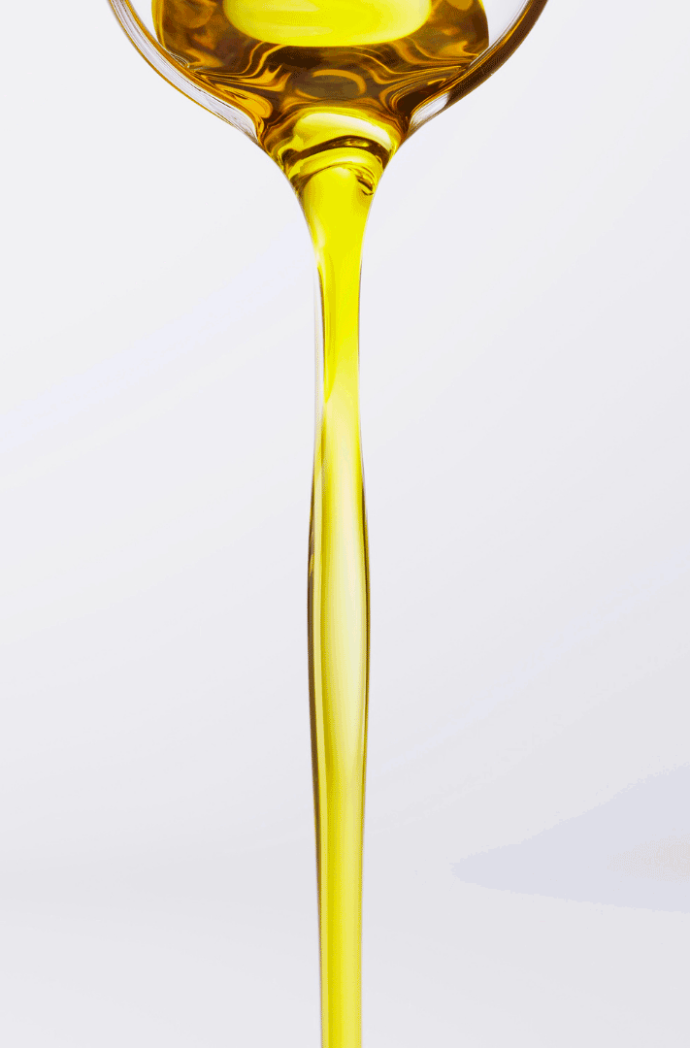
Obtained from the fruit of the olive tree solely by mechanical or other physical means under conditions (temperature) that do not alter the oil, and which have not undergone any treatment other than washing, decanting, centrifugation, or filtration, excluding oils obtained by solvents or mixtures with oils of other kinds.
These are pure fruit juices, and the lower the acidity level of the oil, the better the quality. They are classified in descending order of quality as “extra virgin olive oil” (no organoleptic defects, fruity flavor, and acidity below 0.8% expressed as oleic acid), “virgin olive oil” (maximum organoleptic defects of 3.5 out of 10, maximum acidity of 2%), 'common virgin olive oil' (maximum intensity of organoleptic defects 6 above 10 and maximum acidity 3,3 %) and 'lampante virgin olive oil' (organoleptic defect greater than 6 out of 10 and/or acidity greater than 3,3 %). In the European regulations, the category 'common virgin olive oil' does not exist and the corresponding oils are grouped under the category 'lampante virgin olive oil'.
« Refined olive oils »
'Refined olive oils' are obtained by the (industrial) refining of virgin olive oils, whose free acidity expressed as oleic acid may not exceed 0,3g per 100 g and whose other characteristics comply with those laid down for this category.
« olive oils composed of refined olive oils and virgin olive oils »
Made from a blend of refined olive oil and virgin olive oils other than lampante, whose free acidity may not exceed 1,0 g per 100 g.
« crude olive pomace oils»
Obtained by solvent treatment of olive pomace, excluding oils obtained by mixing with oils of other kinds.
« refined olive pomace oils »
Obtained by refining crude olive-pomace oil, which may not contain more than 0,3 g of free acidity per 100 g.
« olive-pomace oils »
Obtained by blending refined olive-pomace oil with virgin olive oil other than lampante, having an oleic acid content not exceeding 1,0 g per 100 g
Knowing how to taste an olive oil
Olive oil is a true gem in the kitchen, where its nuanced flavors, diverse aromas and health virtues are increasingly appreciated by gastronomy enthusiasts, renowned chefs and epicureans. One can savor its bitterness and subtlety, while its aromas unfold, creating a taste experience that can be described as green fruity, ripe fruity or black fruity. Each oil has a varying unctuosity and aroma, offering unique taste sensations, such as spiciness, highly valued by culinary experts. The delicate nuances of some olive oils sometimes evoke fruits such as tomato or apple, adding to their richness. The premium extra virgin oils are tasted with the same attention as the great wines, so much their aromas and taste delight the most demanding palates.
To fully enjoy an olive oil, especially during assembly tastings, it is essential to follow certain precise rules. The tasting must be blind, using glasses tinted in blue so that the color of the oil does not influence our evaluation. Indeed, the hue of olive oil should not be taken into account in the appreciation of its taste. Before the tasting, the samples are heated to release their aromas. In general, it is advisable not to exceed five different oils per session. Between each sample, it is recommended to bite into a green apple to «clean» the palate and appreciate the next oil without the influence of the previous one. The tasting begins with an olfactory analysis that prepares our brain to detect the flavors that will manifest in the mouth. During the tasting, it is important to circulate the oil in the mouth, as with wine, while gently inhaling air to awaken our taste buds. Finally, it is common not to swallow the sample in order to be able to enjoy the following ones.
THE DIFFERENT DEFECTS OF OLIVE OIL:
- Chome: Flavor of oil from olives piled in an advanced state of anaerobic fermentation (ie without oxygen).
- Mouldy - wet: Flavour of the oil obtained from olives attacked by moulds and yeasts as a result of fruit being stored for several days in humidity.
- Lies: Characteristic flavour of the oil left in contact with the settling "sludge" in batteries and tanks.
- Vineux-vinaigre: This flavor is due to a fermentation process of the olives that results in the formation of acetic acid, ethyl acetate and ethanol.
- Metallic: Characteristic flavour of oil that has remained in contact for a long time with metal surfaces, during grinding, mixing, pressing or storage processes.
- Rance: Flavor of oils that have undergone an oxidation process.
THE DIFFERENT TASTES OF OLIVE OIL:
Olive oil must be tasted like a wine. It is therefore obvious that there are thousands of perceptible aromas. Aromas of fruits, vegetables, aromatic herbs...
However, France classifies oils into three distinct families:
- the fruity black. Is said of an oil produced with ripe harvested olives that will be left for a few days in the box to give an oil with a slight taste called 'chomé'. This fruitiness is controversial because this taste is part of the defects of olive oil.
- the ripe fruitiness. Is said of an oil produced with harvested olives that are ripe and whose taste will be very sweet.
- the green fruity. Is said of an oil produced with olives harvested still green and whose taste will draw on the aroma and intensity.
How to store your olive oil
method of preserving
It is imperative to keep olive oil away from heat, air and light. Check that the can is properly closed, because the olive oil is porous and will absorb odors. Below 13°C, the olive oil solidifies. Nevertheless, when she freezes, it is enough to return the olive oil to room temperature to restore her golden color. Olive oil being a living product, one must not neglect its method of preservation and respect the prescriptions indicated on the bottle. The olive oil is not subject to a best before date (DLC) but to an optimum use by date (DLUO), was in fact an advice from the manufacturer to appreciate the product in the best tasting conditions. If you have exceeded the date indicated on the bottle, the only problem it may undergo is a deterioration in taste. Either a disappearance of aromas or an important gustatory change (rancid...). Olive oil is not quite like a wine, it does not improve as it ages. It all depends on the type of olive used, the extraction technique and the conservation method. Some of our great wines have remained in cellars for more than 25 years ...
CAN OR BOTTLE FOR OLIVE OIL?
Of course, our company being a precursor in the use of olive oil in metal cans, we cannot advise you too much. Three main advantages for this packaging:
- the oil is protected from light (for optimal conservation.
- the can is much lighter (about 300g less per liter)
- the can is unbreakable. If you had the bad experience of dropping a bottle of olive oil, you understand the importance of the can. Indeed, it is extremely difficult to clean even a 1⁄2 liter of olive oil. The oil spreads quickly and does not sponge easily. It takes either miles of paper towels or sawdust to get to the end.
If you are still attracted to the bottle, prefer an opaque bottle or store your olive oil in a cupboard.
FAQ
What is the difference between black olives and green olives?
There is no difference strictly speaking. Indeed, the color is determined by the maturity of the fruit. All olives are green at the start and become black as they grow. On the other hand, some varieties are to be consumed unripe (such as Picholine in Provence), while others are harvested very ripe like certain well-known Moroccan varieties. In Nice, we harvest the variety 'cailletier' or 'caillette' when it is in the middle of its maturity. It is said that the harvest is "rotating", it is at this stage that it develops the most aromas. Some olives are still green while others are very dark brown.
WHAT IS HIS SMOKE POINT?
210 ° instead of 180° for the other oils. Boiling temperature: 300°. Never consume an olive oil that has smoked. It can happen to forget a pan with oil and that one starts smoking. Do not cook this oil, because once the smoke point is reached, the oil will release particles harmful to health.
WHAT IS ITS DENSITY?
Its density is 0.916, or 1 liter of oil weighs 916 g. It is therefore lighter than water. That’s why oil and vinegar (same density as water) do not mix.
SHOULD I PUT MY OIL IN THE REFRIGERATOR?
The solidification temperature of olive oil is about 13°C . Below this temperature, the olive oil «freezes», that is to say that whitish particles will form as the temperature goes down until freezing and solidification. A few hours at temperature will restore her natural dress. This does not have a negative impact on its quality but it is not necessary to put it in the refrigerator.
HOW MANY OLIVES DO YOU NEED TO MAKE 1 LITER OF OLIVE OIL?
It takes 4 to 6 kilos of olives to make 1 liter of olive oil, depending on the varieties and years
HOW MANY–ARE THERE DIFFERENT VARIETIES OF OLIVES?
There are about 400 varieties in the world, mostly located in the Mediterranean basin.
IS THE CLOUDY OLIVE OIL BETTER?
Some say that when olive oil is cloudy, it’s a sign that it is artisanal and therefore very good. Beware of this kind of reasoning, indeed, a cloudy oil simply means that it has neither been filtered nor decanted, that’s all... Some manufacturers have understood that the cloudy side has an impact on sales and offer unfiltered early oils for small retailers in markets... Indeed, it is not synonymous with good taste and it will rather be necessary to consume them quickly at the beginning of harvest. The suspended particles still release aromas and macerate in oil. This can lead to a taste change in olive oil and can be fatal to good taste in the long term. It is obvious that to provide you with a correct product, the minimum is to filter olive oil and thus stop its natural chemical development.
Par ailleurs, nous mettons à disposition une huile d'olive non filtrée, à partir d’olives récoltées en Novembre, spécialement pour les puristes pressés qui ne veulent pas attendre la décantation pour apprécier l’huile nouvelle. À savourer rapidement.

To install this Web App in your iPhone/iPad press
 and then Add to Home Screen.
